// NAVIGATION MATRIXSYSTEM ACTIVE
ELTHUS ENTERPRISEGLOBAL 99.99% SLA
What an e-commerce website really costs in 2026, which features online shoppers expect, how cards, local payment methods and cash on delivery work together, and when to choose Shopify, WooCommerce or a custom store.


Building an e-commerce website is not only about listing products. Shoppers expect a fast mobile experience, clear prices in their currency, delivery charges by area, order updates by WhatsApp, SMS or email, and familiar ways to pay.
The essentials are the same whether you sell clothing, electronics, groceries or handmade goods: a clean product catalogue with variants (size, colour, weight), search and filters, a short checkout, delivery zones, stock that updates in real time, and order tracking your team can manage without a developer.
Most abandoned carts happen at checkout. Keep it to one page, allow guest checkout, show the delivery fee before payment, and never surprise the buyer with extra charges.
Quotes vary widely because "e-commerce website" can mean very different things. A template store on a hosted builder can launch on a small budget, while a tailored store with integrations and custom features costs many times more. As one market example, Sri Lankan agencies' published 2026 ranges run from roughly LKR 35,000 to 100,000 for template builds to around LKR 500,000 and above for custom stores.
The real cost drivers are: custom design versus a template, the number of products and variants, payment gateway and courier integrations, multi-language or multi-currency support, connections to POS, inventory or accounting software, and how much content and product photography you need.
Remember the running costs too: hosting, the domain, SSL, payment gateway transaction fees, app or plugin subscriptions on hosted platforms, and ongoing maintenance and security updates. Always compare written quotes that list exactly what is included.
Most stores combine an international gateway such as Stripe or PayPal for global cards with a regional gateway (PayHere, for example) for local cards and wallets, where it offers better approval rates, local-currency settlement or lower fees. Check each provider's availability for your country, fees, settlement times and onboarding documents before you decide.
Cash on delivery is still expected in many markets, so strong stores offer both: online payment for speed, and COD for trust with first-time buyers.
Whatever the gateway, an order must only be marked as paid after the gateway's server-to-server notification has been verified. Relying on the customer's browser returning to a 'thank you' page is how fake or duplicate payments slip through.
import { createHash, timingSafeEqual } from "node:crypto";

const md5 = (value: string) =>
  createHash("md5").update(value).digest("hex").toUpperCase();

// PayHere signs each payment notification. Recompute the signature
// with your merchant secret and only accept a match.
export function isValidPayHereNotification(n: {
  merchant_id: string;
  order_id: string;
  payhere_amount: string;
  payhere_currency: string;
  status_code: string;
  md5sig: string;
}) {
  const secret = md5(process.env.PAYHERE_MERCHANT_SECRET!);
  const expected = md5(
    n.merchant_id + n.order_id + n.payhere_amount +
    n.payhere_currency + n.status_code + secret
  );
  const a = Buffer.from(expected);
  const b = Buffer.from(n.md5sig.toUpperCase());
  return a.length === b.length && timingSafeEqual(a, b) && n.status_code === "2";
}Hosted platforms such as Shopify are quick to launch and handle hosting for you, but monthly plans, apps and transaction costs add up, and local payment or courier features may depend on third-party apps.
WooCommerce on WordPress gives you more control and a large plugin ecosystem, but it needs regular updates, good hosting and careful plugin choices to stay fast and secure.
A custom e-commerce platform makes sense when you need things off-the-shelf tools do badly: shared stock with physical branches, wholesale and retail pricing, custom delivery rules, deep links to POS and accounting, or a store that must stay fast with thousands of products. It costs more up front but removes ongoing workarounds.
Many retailers sell in a physical shop and online at the same time. If the website and the shop counter keep separate stock counts, you will eventually sell an item you no longer have.
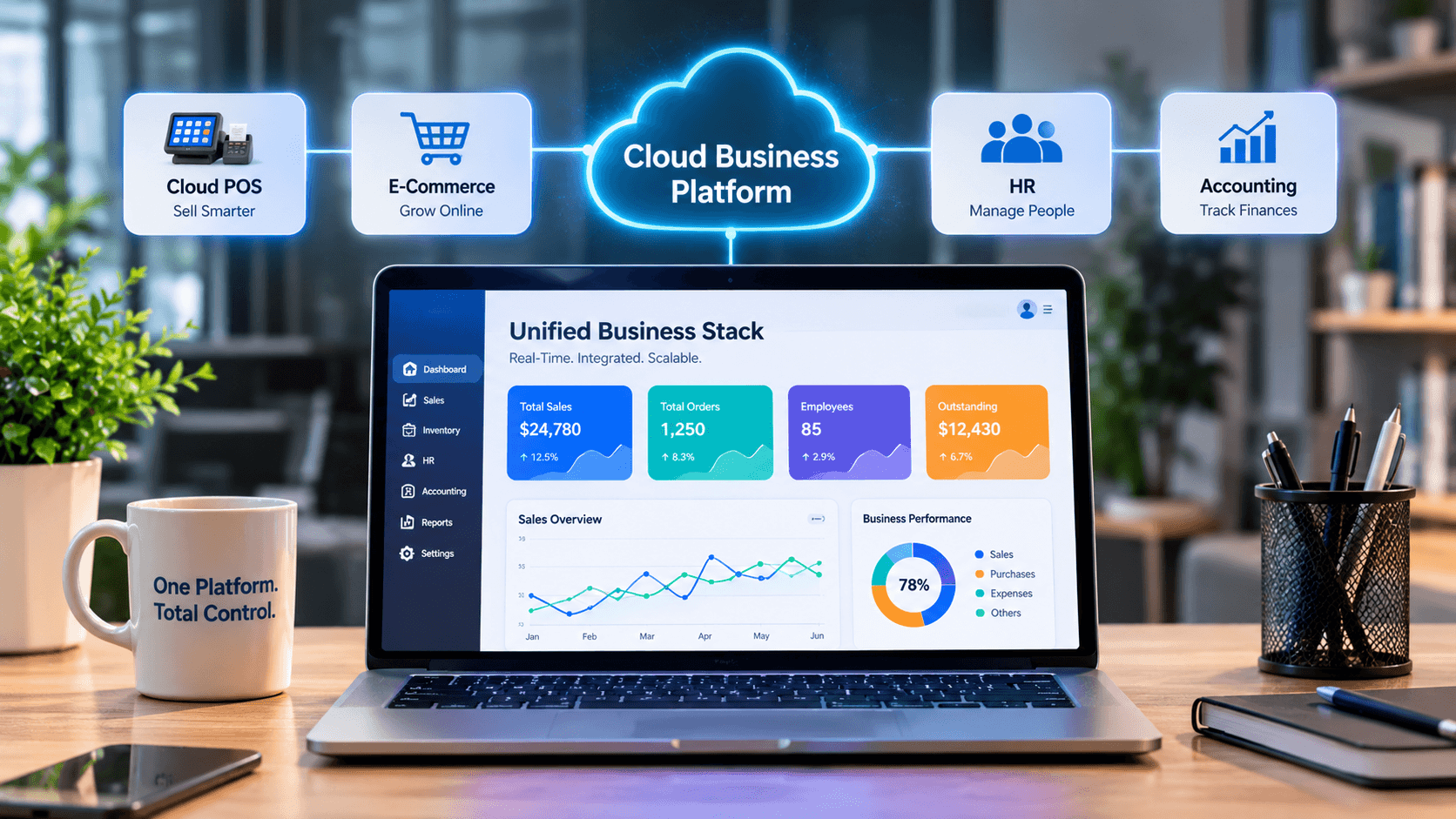
Connecting the online store, cloud POS and accounting to one database means every sale, whether online or at the counter, reduces the same stock count and posts the same revenue and tax entries. That is the difference between a website and an e-commerce system.
Before launch, make sure every product has a unique title and description, compressed images with descriptive alt text, product structured data (price, availability, reviews), clean URLs and a working XML sitemap. Test the full checkout on a mid-range Android phone over mobile data, and set up analytics with purchase tracking so you know which channels actually sell.
It depends on scope. A template store on a hosted platform can launch on a small budget, while a custom e-commerce website with payment, courier and inventory integrations costs significantly more. Design, product volume, integrations and ongoing maintenance drive the price, so compare detailed written quotes against the same scope.
Choose by where your customers are. International gateways such as Stripe or PayPal cover global cards, while regional gateways often accept more local cards and wallets and settle in local currency. Compare availability in your country, fees, settlement time and supported payment methods.
Yes. Many successful online stores offer both. Online payment gives faster cash flow, while cash on delivery builds trust with first-time buyers. You can also limit COD by order value or delivery area to reduce failed deliveries.
Shopify suits small catalogues that need to launch quickly. A custom store is better when you need shared stock with physical branches, wholesale pricing, custom delivery rules or tight links to POS and accounting software.
A template-based store can launch in one to three weeks. A custom e-commerce website with integrations usually takes six to twelve weeks, depending on product data, payment approval and how many systems it connects to.
Online storefronts with inventory sync, multi-currency checkout, PayHere and card payments, and automated order tracking.

Speak with our team about custom websites, SEO and AI search setup, payment gateway integration, or business software.