// NAVIGATION MATRIXSYSTEM ACTIVE
ELTHUS ENTERPRISEGLOBAL 99.99% SLA
When should a business build custom software instead of buying an off-the-shelf system? A practical guide to custom software development: common systems, what drives the cost, how a good development process works, and how to choose a software development company.

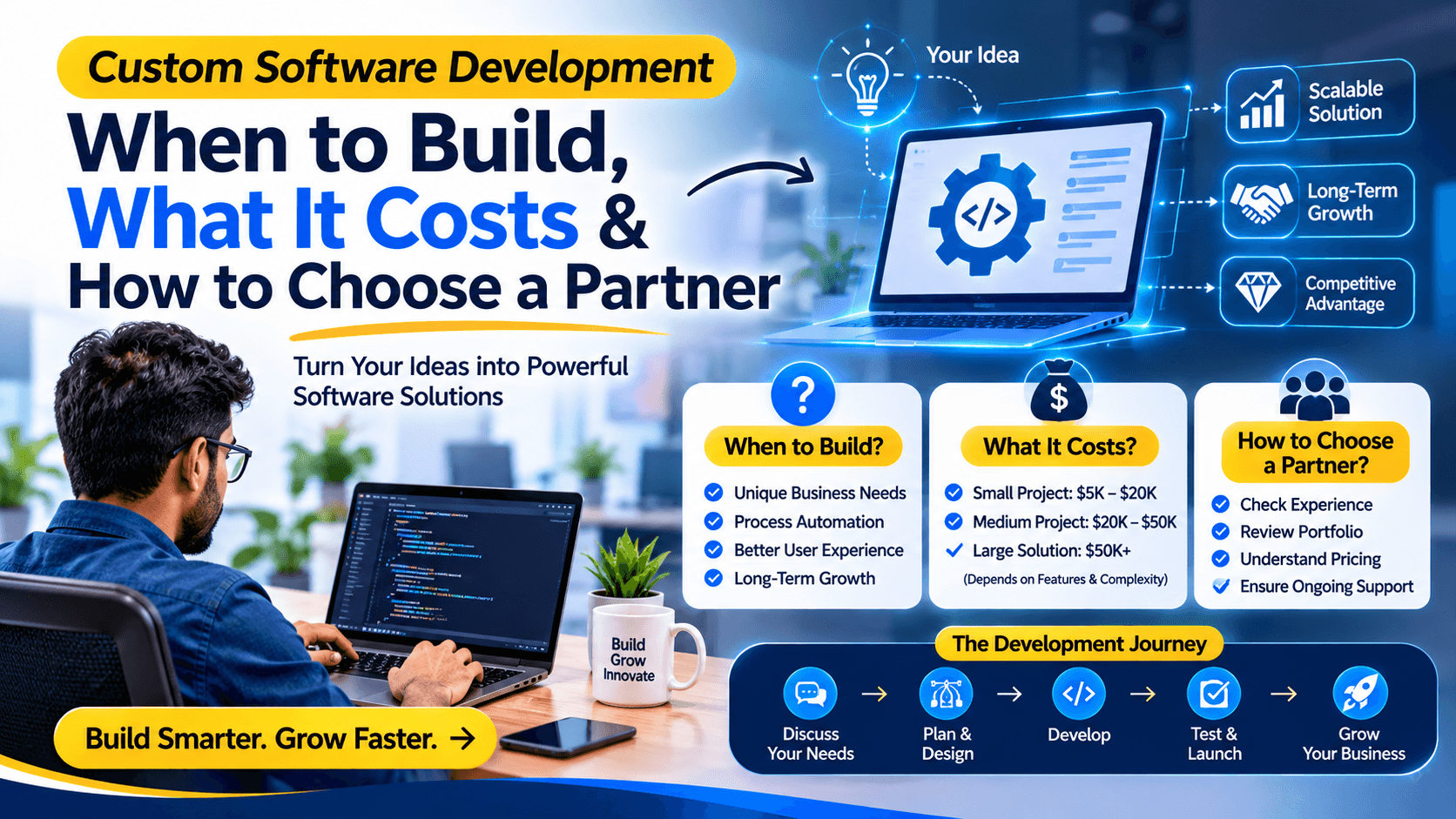
Off-the-shelf software is the right choice when your process is standard and the tool fits it well. Custom software development makes sense when one or more of these is true: your team re-types the same data into several systems; spreadsheets have become your real system; licence costs grow with every new user; the tool cannot handle your pricing, approval or delivery rules; or you need features no product offers.
The goal is not software for its own sake. It is removing manual work, errors and delays from the processes that run your business.
Common custom systems include ERP-style platforms that combine sales, purchasing, stock and accounting; inventory and warehouse management systems; HR, attendance and payroll; learning management systems; customer and supplier portals; booking and service management; and mobile apps for field staff or customers.
Many projects are integrations rather than brand-new systems: connecting a website, POS, payment gateway, SMS gateway and accounting so data flows automatically between them.
The cost of custom software depends on scope (number of modules and screens), integrations with other systems, the number of user roles, data migration, security and compliance needs, and whether you need web, mobile or both.
Location and team model matter too. Hourly rates listed on directories such as Clutch vary widely by region; for example, many Sri Lankan development firms list about US$25 to 49 per hour, which is one reason businesses outsource development. Total project cost still varies enormously with scope, so insist on a written estimate broken down by module.
The safest way to control cost is to start with a minimum viable product (MVP): the smallest version that solves the most painful problem, released in weeks rather than months, then extended based on real use.
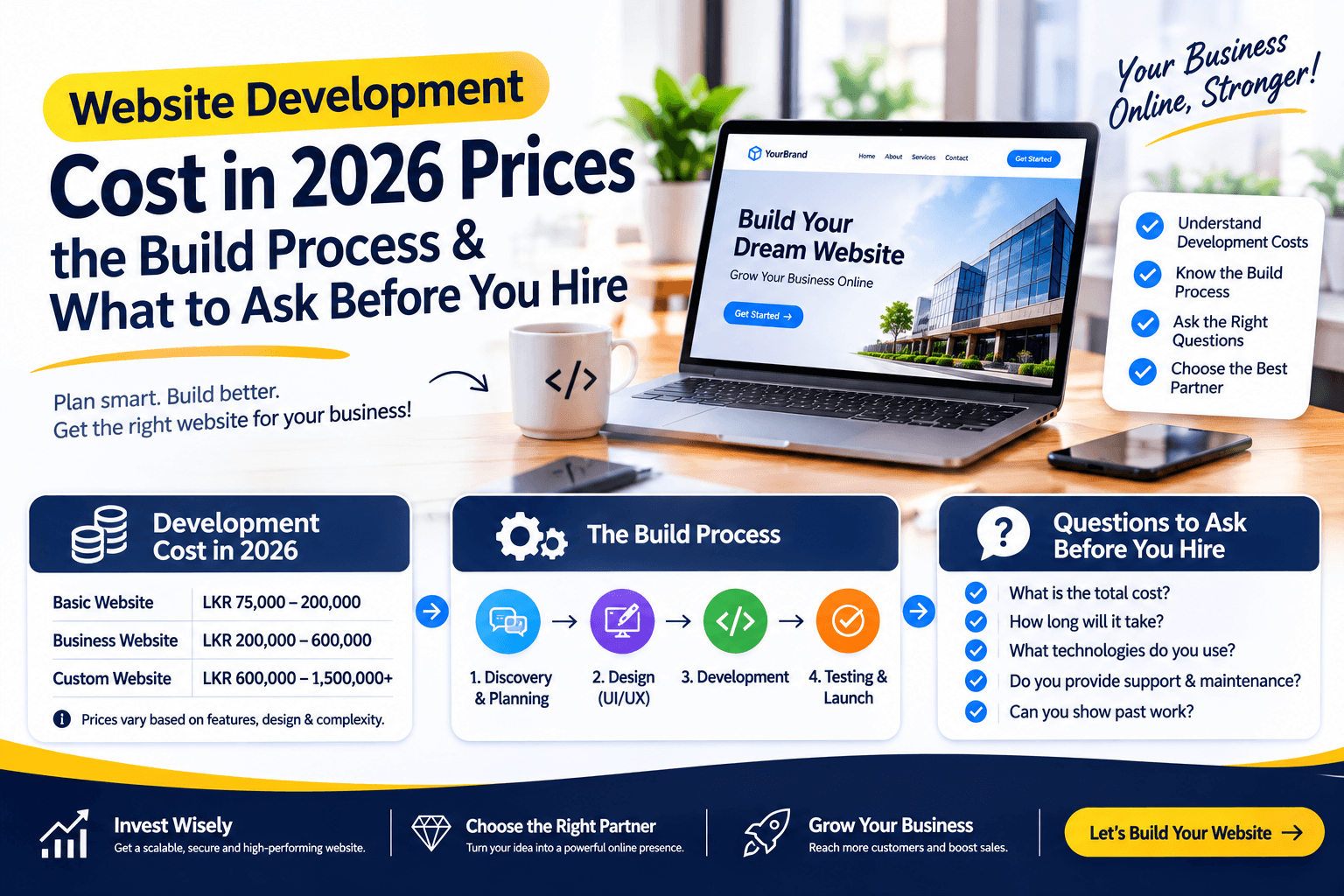
Strong delivery starts with discovery: mapping your current process, users, data and pain points before writing code. Then comes a clickable prototype, development in short sprints with a working demo every one or two weeks, automated and manual testing, a staged launch with data migration, and training.
After launch, software needs support: monitoring, backups, security patches and improvements. Agree the support plan and response times before the project starts.
Business software holds customer, staff and financial data, so security cannot be an afterthought. Expect role-based access control, encrypted connections, audit logs for sensitive actions, regular backups with tested restores, and secure handling of passwords and payment data.
Laws such as the EU and UK GDPR, and similar national data protection acts, set rules for how personal data is collected, used and kept. Build consent, access controls and retention rules into your system from the start, and confirm your obligations with a legal adviser.
Look for a partner with systems similar to yours already running in production, a clear discovery and estimation process, regular demos, and transparent communication. Ask who owns the source code and intellectual property, what documentation you will receive, how hosting and support are handled, and what happens if the team changes.
The best software company for your business is the one that understands your operations, can explain trade-offs in plain language and commits to support after launch, not simply the lowest bid.
It depends on scope, integrations, user roles, data migration and security needs, and hourly rates vary widely by region. Starting with a focused MVP and getting a module-by-module written estimate is the best way to control cost.
A focused MVP usually takes about two to four months. Larger systems such as a full ERP are typically delivered in phases over six months or more, with each phase going live as it is ready.
Agree this in writing before the project starts. In most custom development contracts the client owns the source code and intellectual property once the work is paid for, and receives the code, documentation and access to all accounts.
Buy an off-the-shelf ERP if your processes are standard and it fits without heavy customisation. Build custom software when your workflow is unique, licence costs keep rising, or you are spending more on workarounds than a tailored system would cost.
Usually, yes. Most modern systems offer APIs or data exports, so custom software can connect your website, POS, payment gateway, SMS gateway and accounting software so information flows automatically.
Custom software and ready-to-use business systems: e-commerce, Cloud POS, LMS, HR & payroll, accounting, AI and cloud.

Speak with our team about custom websites, SEO and AI search setup, payment gateway integration, or business software.